
The Six-Month Wire Transfer (And What We're Doing About It)
All In For Sport is partnering with Sarreya, a women-led grassroots organization in Somaliland, Love Futból, Bonito Foundation, and the Institute for Community Sustainability, to explore whether decentralized financial tools can solve a problem that traditional banking has failed to address: getting resources to communities that global finance has deprioritized.
This post shares who we are, what we're experimenting with, and what we're learning. We're documenting this journey openly because we believe the questions we're asking matter beyond our specific project - and because we'd love to learn from others working on similar challenges.
The title refers to a real experience. When partners tried to send a routine grant payment to Sarreya in Somaliland, it took six months to arrive - blocked, rerouted, questioned, delayed. Other orgaizations tell us us that some transfers never make it at all. Those that do, lose significant value to fees and exchange rates along the way. For organizations doing essential work in places the banking system treats as peripheral, this isn't an edge case. It's the norm.
Who is Sarreya?
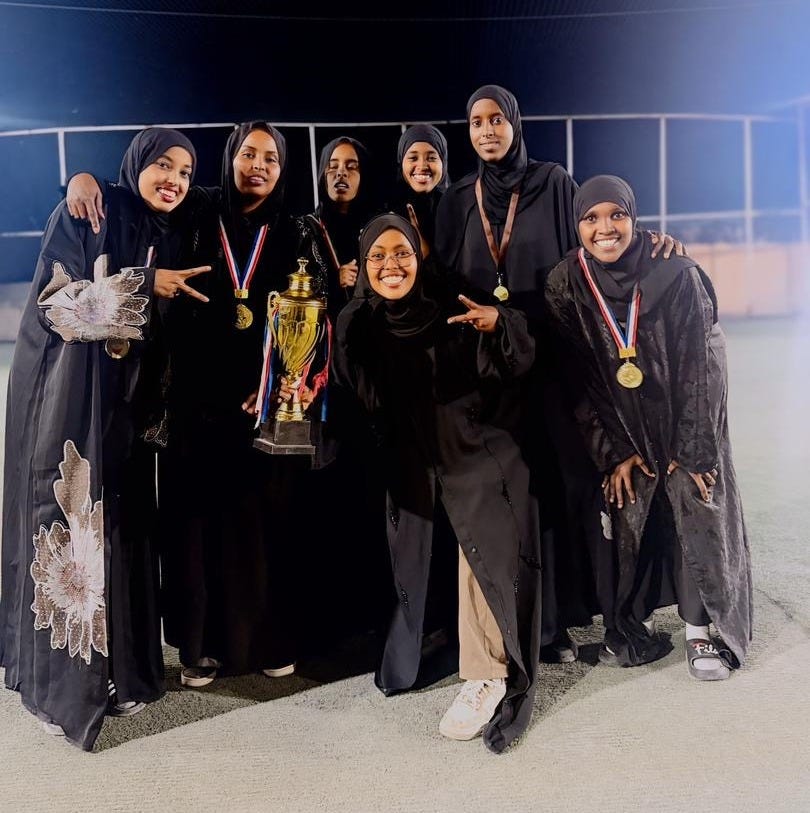
Sarreya is a women-led grassroots organization that has been creating space for women and girls to play sport in Somaliland for over a decade.
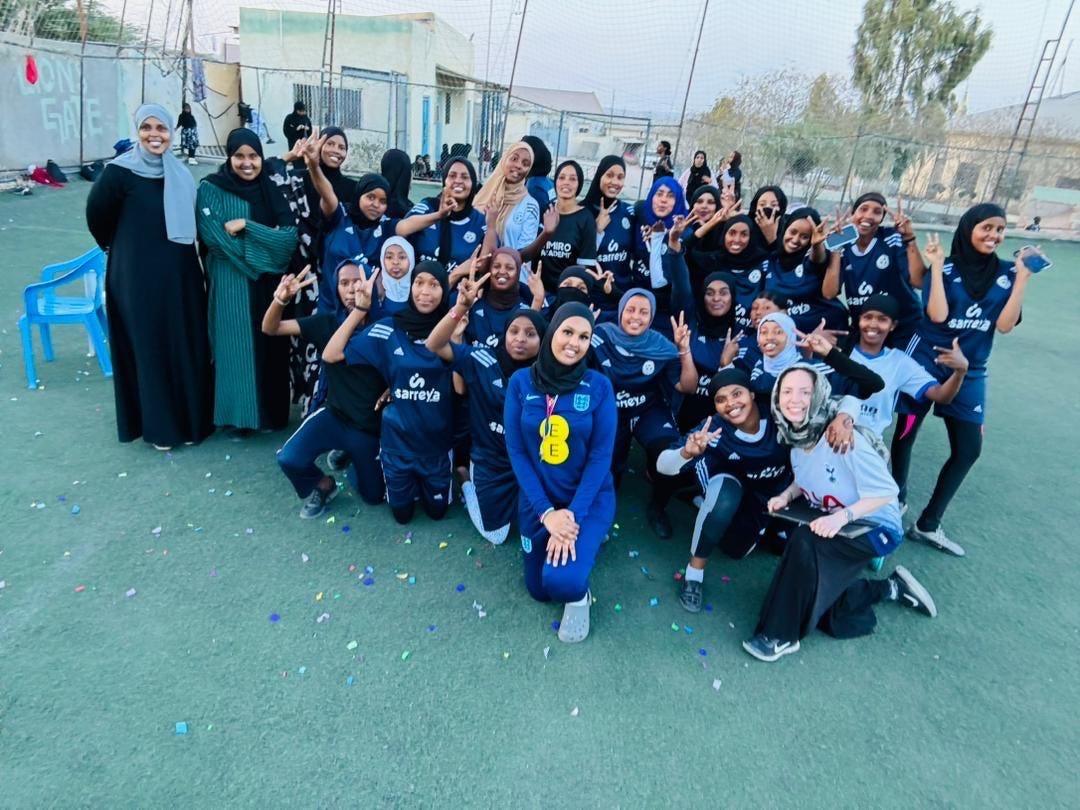
Not awareness campaigns. Not development programs. Just sport. Health. Community. What started with six women looking for somewhere to play has grown into something much larger. Sarreya now connects around 300 women and girls across Hargeisa through weekly community football sessions, performance training squads, coaching courses, tournaments, sports days and wider events. Their football club, Hiigsi FC, runs on a pay-what-you-can model, never turning anyone away. The co-founders helped organise the Somaliland Marathon, bringing a record 55 female runners to the start line. They've hosted Women's Sports Days combining football, athletics, and community celebration. All of this built by women who just wanted to play.
Sarreya has been largely self-funded and self-sufficient. But when they started looking for external support to grow what they've built, they hit a wall familiar to anyone who has tried to move money to communities that global finance treats as peripheral: transfers blocked, delayed, or eaten by fees. Somaliland's unrecognized political status means the international banking system often treats it as a gap on the map.
This is the problem we're trying to help solve.
Who is All In For Sport?
All In For Sport (AIFS) is a coordi-nation for grassroots sports projects - a network supporting community-led initiatives that advance inclusion and empowerment through sport. We're on a mission to bring collaborative governance and innovative funding tools to sports communities worldwide.
We're not a charity or a foundation. We're a network of people who believe sport has unique power to build community, experimenting with new tools for coordination, funding, and governance. Our origins trace to Krause House, a decentralized autonomous organization (DAO) formed to enable fans to collectively own an NBA team. That experiment sparked a question: what if these same kinds of coordination tools could enable and empower community-led initiatives at the grassroots level?
We work closely with SuperBenefit and their Reimagining Power Project, which explores how web3 technologies can redistribute power and transform systems toward more equitable outcomes. Through the Reimagining Power Project, AIFS ran a series of community gatherings bringing together practitioners from sport, philanthropy, and web3 to explore these intersections - those conversations directly inform this work. SuperBenefit's knowledge garden documents the frameworks and playbooks that shape our approach.
We're also connected to a broader ecosystem asking similar questions: the Ethereum Localism movement, Greenpill Network, ReFi DAO, Breadchain Cooperative, and others building bridges between decentralized tools and real community needs. We're learning from their experiments and contributing our own.
Earlier this year, through the International Olympic Committee's Tech365 Explore program, AIFS connected with Sarreya Sport. When we heard about the struggles they'd had trying to get grant funding from Europe to the girls playing football in Somaliland, we wanted to know: what would it actually look like to route funding around the world without institutions in the way? Could decentralized tools actually serve the communities they're supposed to serve? We decided to find out if blockchain could do what banks couldn't.
What we're experimenting with
The core of what we're testing is straightforward: using stablecoins - digital dollars on blockchain networks - to move funds in minutes rather than months, without losing value to exchange rate fluctuations or intermediary fees.
But moving money is only part of it. We're also building transparent treasury management through multi-signature wallets, where multiple approvals are required for transactions and everyone involved can see how resources flow.
Alongside this, we're developing governance structures designed to keep decision-making power in community hands rather than with distant funders, and creating on-chain documentation that tracks roles, responsibilities, and contributions in a shared record that doesn't depend on any single institution.
These aren't theoretical. They're the actual infrastructure we're building and testing with Sarreya.
What we've built so far
The first phase has been about foundations. Less glamorous than you might expect, but essential.
We've established a governance structure with two layers: a stakeholder group that meets monthly for strategic oversight, and an operational team handling day-to-day coordination. This approach draws on SuperBenefit's DAO Primitives framework - a pattern language for decentralized organization that emphasizes small, purpose-led teams with clear mandates, working within larger coordination structures.
Rather than designing a monolithic organization upfront, *DAO Primitives* encourages starting with the minimum viable structure and letting governance emerge from actual needs. For Sarreya, that means keeping decision-making close to the people doing the work, while maintaining transparent accountability to the broader stakeholder group. Decisions are made by consensus. The people closest to the work shape how it unfolds.
We've set up the technical infrastructure - digital wallets, multisig arrangements, documentation processes - and allocated initial funds to the operations team. We've also begun mapping how capital currently flows to Sarreya, identifying friction points where alternative pathways might reduce delays and costs.
What we've learned (so far)
One insight has emerged more clearly than any other: the hard part isn't building the infrastructure. It's making it accessible.
Even with partners who are keen, capable, and motivated - getting comfortable with web3 tools is genuinely difficult. The interfaces assume knowledge that most people don't have. The mental models are unfamiliar. The language is dense with jargon that even people in the space don't always agree on.
Somaliland isn't a place waiting to be introduced to digital finance. They've had widespread mobile money since the early 2000s, before most of the West had heard of Apple Pay. The issue isn't technological sophistication. It's that our "decentralized" tools still carry assumptions baked in by developers who live in very different contexts.
If we want this to work - not just for Sarreya, but for the thousands of organizations like them - we need new ways of explaining, new materials, new mental models. We need technical tools that feel as intuitive as the mobile money systems already in widespread use.
This insight is now central to what we're building. We're not just testing whether stablecoins can move faster than banks. We're trying to understand what it actually takes to make these tools accessible to communities they're supposed to serve.
Building in the open
It's the end of the year - a natural moment to step back and reflect. We're approaching the mid-point of our Tech365 timeline, and we're at a stage where the foundations are taking shape and we're preparing to test actual fund transfers in the coming weeks.
But mostly, we're sharing because the learning matters beyond our specific project. There are thousands of organizations like Sarreya - community-led, locally rooted, doing essential work in places that global systems have deprioritized. If we can figure out what works here, in one of the most challenging contexts for international fund transfers, we'll have something useful for others.
We also believe these tools represent something larger than efficiency gains. At their best, decentralized technologies can enable new forms of collective coordination - communities pooling resources, making decisions together, building shared infrastructure that serves people and planet rather than extracting from them.
The dominant crypto narrative may be speculation and scams, but there's another current: quieter, more practical, more aligned with the solidarity economies and mutual aid traditions that communities have always practiced. We want to be part of that current, and we want to document this journey openly so others can learn alongside us.
What's next
Over the coming months, we'll be testing actual fund transfers through the infrastructure we've built. We'll be documenting what works and what doesn't. We'll be developing onboarding resources and playbooks - the kind we wish existed when we started.
And we'll be sharing what we learn here.
If you're a funder curious about how decentralized tools might reduce friction in getting resources to grassroots partners - we'd love to talk.
If you're working in sport for social change and facing similar challenges with financial access - we'd love to learn from you.
If you're building in the web3 space and want to see these tools used for something beyond speculation - come join the conversation.
This is early days. We're figuring it out as we go. But we believe something important is possible here, and we'd rather build it in the open than behind closed doors.